BIM Support, Swissgrid
Facts and Figures
- __
Client
Swissgrid AG
- __
Location
Aarau (Pilot projects including Winkeln, Laufenburg-Mühleberg, and Valle Maggia)
- __
Participants
Basler & Hofmann AG , MetaXD AG, Swissgrid AG
- __
Project Contract Value
CHF 315000
- __
Reference Customer Name
Reza Nili
- __
Time Frame
01.04.2023 - 31.03.2024
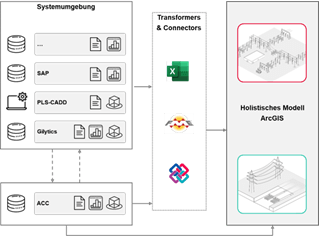
Modernising a national power grid is a complex and far-reaching undertaking. For Swissgrid AG, it meant more than upgrading critical infrastructure; it required a decisive step into the digital future. This is where BIM@Swissgrid came in — a forward-looking initiative focused on implementing Building Information Modeling (BIM) in pilot projects across grid construction, including substations and transmission line developments.
The objective was ambitious yet clearly defined: to develop and apply BIM standards that would significantly improve the quality, transparency, and efficiency of construction and operational processes in both structural and civil engineering.
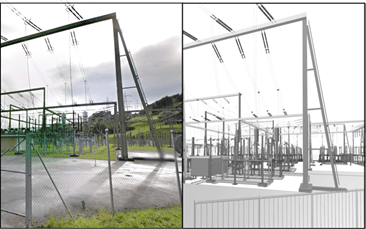
At the heart of this transformation was Gianluca Genova, a leading BIM expert at Basler & Hofmann AG and MetaXD AG, who played a key role within Swissgrid’s BIM core team. Combining strategic vision with operational execution, Genova became a driving force behind several major pilot projects, including Substation Winkeln, the Laufenburg–Mühleberg transmission line project, and the broader Valle Maggia programme.
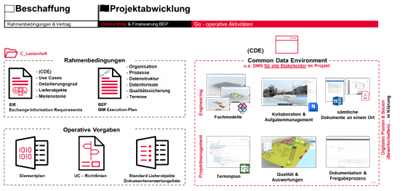
To ensure that these pilot projects would not remain isolated successes but instead lay the groundwork for long-term standards, Genova led the development of essential BIM foundations. These included comprehensive BIM process documentation, specific use case guidelines, and a core BIM Execution Plan (BEP). These were complemented by clearly defined Exchange Information Requirements (EIR), ensuring smooth information exchange and consistent data management across all project stakeholders.
However, the true innovation of BIM@Swissgrid extended beyond the implementation of new planning methods. One of the project’s most significant ambitions was the development of an integration concept linking BIM with Geographic Information Systems (GIS). By connecting these two technological domains, the initiative moved beyond isolated building models and enabled a far more holistic view of spatial infrastructure.
This made it possible to integrate not only construction data, but also geospatial environmental data, external networks such as utility systems, and road infrastructure into one connected data ecosystem. The result was a stronger basis for informed decision-making across planning, construction, and operations.
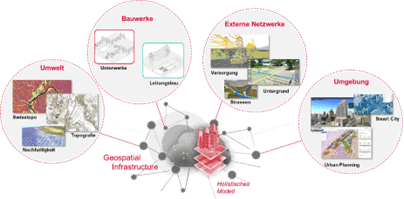
Ultimately, this robust and interconnected data foundation paved the way for the project’s most far-reaching ambition: the creation of an overall concept for a target system to manage an asset digital twin. Driven by close interdisciplinary collaboration between structural engineering, civil engineering, and GIS, Swissgrid successfully established an innovative foundation that will allow the company to use and manage digital representations of its assets effectively throughout their entire lifecycle.
With BIM@Swissgrid, Swissgrid demonstrates how digital methods can do more than optimise individual processes — they can reshape the way infrastructure systems are planned, built, and managed. The project stands as a strong example of the transition toward connected, data-driven, and sustainable grid management in Switzerland.
