Digital Transformation in Construction: How the Embraport Building B Project Set a New Standard for BIM, BIM2FM, and Smart Asset Management
Facts and Figures
- __
Client
Zürcher Freilager AG.
- __
Construction Cost
CHF 41000000
- __
Gross Floor Area
6,500 m².㎡
- __
Location
Embraport, Embrach (Building B); Client located in Zurich (Rautistrasse 77).
- __
Participants
MetaXD AG, Basler & Hofmann AG, Zürcher Freilager AG.
- __
Project Contract Value
CHF 4100000
- __
Reference Customer Name
Jean-Claude Maissen.
- __
Time Frame
General planning services: 2018-2022; AIM CDE Support: 2024-2025.
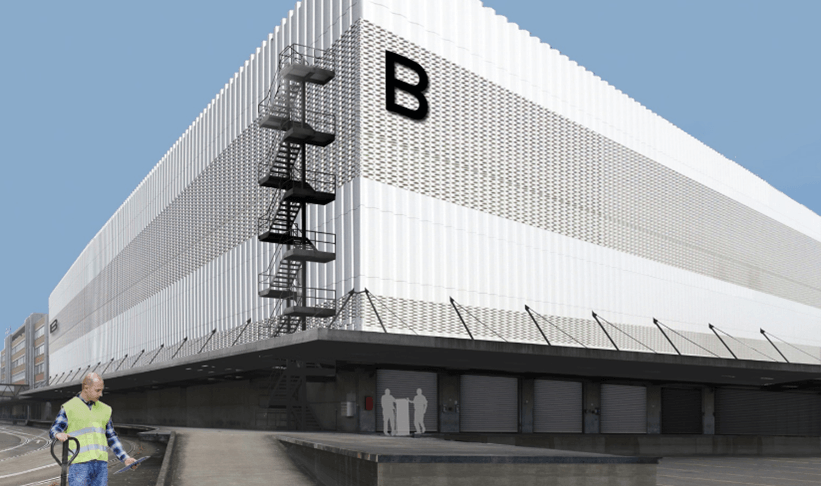
In the heart of Embrach, a remarkable transformation took shape—one that shows how digital transformation in construction is no longer just a future ambition, but a practical reality. The Embraport Building B project stands as a powerful example of how integral digital planning, BIM management, and smart operational handover can come together to create lasting value across the entire building lifecycle.
Commissioned by Zürcher Freilager AG and backed by a construction volume of CHF 41 million, this ambitious project involved the renovation and expansion of an existing logistics building. But this was not simply a matter of rebuilding physical space. It was about rethinking how a complex building project could be planned, coordinated, delivered, and operated through a truly connected digital ecosystem.
From the very beginning, the vision was clear: to create high-quality storage spaces capable of meeting the strict requirements of customers with demanding storage needs. To make that possible, the project team relied on a forward-looking strategy built around Building Information Modeling (BIM) and long-term digital asset value.
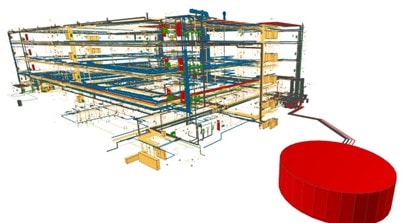
The planning phase began in 2018, laying the groundwork for a highly coordinated process that would later move into execution in 2021. At the center of this transformation was Basler & Hofmann, appointed as the general planner and entrusted with developing an intelligent BIM model that would support not only the planning and construction stages, but also future building operations.
A key role in this success story was played by Gianluca Genova, who served as BIM Manager. His responsibility went far beyond coordination. He developed and implemented the BIM Execution Plan, defined the project’s data structures, and aligned all specialized disciplines within one common digital framework. This ensured that the project’s information flow remained structured, reliable, and usable from day one.
To support collaboration, the team used BIM360 as the Common Data Environment (CDE) during planning and construction. This created a centralized platform where project information could be managed efficiently and transparently. At the same time, regular quality assurance checks using BIM Collab Zoom Pro and Singular Qualifier helped maintain a consistently high level of model quality, reducing coordination issues and increasing confidence in the digital deliverables.
What truly makes the Embraport Building B project stand out is its focus on what happens after construction. Too often, valuable project data is lost or fragmented when a building moves into operation. Here, that gap was intentionally closed through a strong BIM2FM strategy.
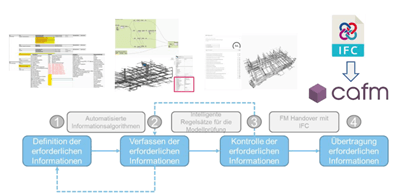
A central milestone of the project was the seamless integration of the building data model into the operational environment. Gianluca Genova ensured that all facility-management-relevant information was correctly embedded into the specialized models from the outset. This meant that during the FM Handover phase, the project team could transfer IFC files directly into the client’s CAFM system, waveware, with minimal friction.
This was more than a technical handover. It was the creation of a continuous digital workflow connecting design, construction, and facility management. By enabling structured and reliable data transfer into operations, the project demonstrated how BIM in construction can unlock long-term value well beyond the building site.
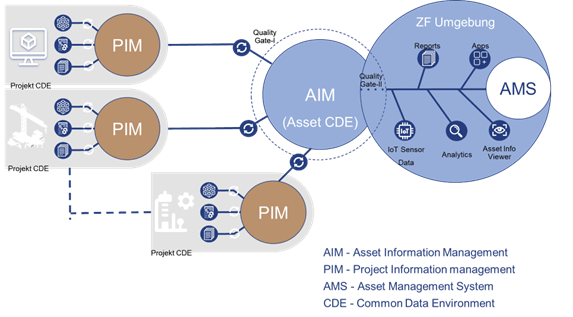
The digital maturity of the project did not stop with BIM handover. To further strengthen long-term asset management, the team also evaluated and implemented an Asset Information Model Common Data Environment (AIM-CDE).
This is where MetaXD AG came in as the leading consultant and implementation partner. Their mission was to establish a Single Source of Truth for all critical building information—bringing together model-based data, 2D plans, and maintenance documentation in one structured digital environment.
The result was a powerful new layer of digital asset intelligence. Through custom bi-directional connectors, the newly implemented AIM-CDE was successfully integrated with the existing waveware CAFM system. This allowed data to be synchronized automatically between systems, reducing manual effort, minimizing the risk of errors, and ensuring that building information remains accurate, accessible, and useful throughout the entire lifecycle of the asset.
In practical terms, this means better decisions, more efficient maintenance processes, and a far more resilient approach to asset management in construction and operations.
The Embraport Building B project is more than a renovation project. It is a compelling example of how digital transformation in the construction industry can succeed when technology, process, and people are aligned.
By combining integral BIM planning, strong BIM management, a structured BIM2FM handover, and an advanced AIM-CDE strategy, the project proves that digital methods are not just useful for design coordination—they are essential for creating smarter, more sustainable, and more operationally efficient buildings.
It shows how a building can evolve from a construction project into a data-driven asset, where information remains alive and valuable long after the construction phase ends.
As the industry continues to move toward smarter and more connected workflows, the Embraport Building B project offers a clear blueprint for the future. It highlights the real-world benefits of BIM, CAFM integration, digital asset management, and a lifecycle-oriented approach to project delivery.
For developers, planners, contractors, and operators alike, this project is a reminder that the future of construction lies in building not only with concrete and steel, but with structured data, connected systems, and a clear digital vision.
